The hospital wasn't simply implementing AI. It was building a clinical capability it had never had before.
RAPID AI
Building a New Stroke Treatment Capability
RAPID AI was not an isolated technology implementation. It was one component of a much larger transformation: bringing mechanical thrombectomy to a hospital where the procedure had never previously been performed.
Stroke care is extraordinarily time-sensitive. For patients with large-vessel occlusion strokes, mechanical thrombectomy can provide an important treatment option for appropriately selected patients.
But introducing mechanical thrombectomy into a hospital is not simply a matter of purchasing equipment or adding a new procedure.
It requires building an entirely new system around the patient.
That system includes Emergency Medicine, Neurology, Neurosurgery, Diagnostic Imaging, Radiology, Medical Imaging Technologists, Nursing, Information Technology, Administration, Purchasing, Professional Practice, patient transport, communication systems and many others.
RAPID AI was one piece of that larger system.
THE REAL PROJECT
The hospital had never previously performed mechanical thrombectomy.
That meant the organization wasn't simply implementing a new piece of software.
We were helping establish a new clinical capability.
Every part of the existing system had to be examined.
How would a patient be recognized?
How would the Emergency Department respond?
How quickly could imaging occur?
How would imaging be interpreted?
How would the appropriate specialists be contacted?
How would the patient move through the hospital?
How would information move between teams?
How would staff know what was expected of them?
What happened after hours?
How would the process work when the people involved were working different shifts?
What happened when the patient needed to be transferred?
And how could technology support the clinical team without becoming another barrier?
These questions made the project much larger than the implementation of any individual technology.
WHERE RAPID AI FIT
RAPID AI provided an important technological component of the new stroke-care pathway.
The platform included CT imaging analysis and post-processing capabilities that could provide additional information to clinicians as they assessed patients for potential treatment.
The important point, however, was not simply what the software could do.
The important question was:
How would this technology become part of the clinical system?
That required understanding the workflow surrounding it.
Technology had to connect with the clinical decisions being made, the people making those decisions, the imaging process, the communication pathways, and the broader requirements of the new thrombectomy service.
IMPLEMENTATION WAS A MULTIDISCIPLINARY PROJECT
The implementation required collaboration across multiple areas of the organization.
This included:
Emergency Department physicians and staff
Neurologists
Neurosurgeons
Radiologists
Medical Imaging Technologists
Nurses
Information Technology
Administration
Purchasing
Professional Practice
Switchboard
Department leadership
Other operational and clinical stakeholders
Each group had a different perspective.
And each perspective mattered.
A physician was thinking about clinical decision-making.
A radiologist was thinking about imaging and interpretation.
A Medical Imaging Technologist was thinking about the practical realities of getting the imaging completed.
IT was thinking about technology, infrastructure, integration and reliability.
Purchasing was thinking about procurement requirements and organizational resources.
Administration was thinking about cost, risk and sustainability.
Nursing was thinking about workflow and patient care.
The challenge was bringing those perspectives together into one functioning system.
THE "WHY" HAD TO BE UNDERSTOOD
One of the most important parts of implementation was helping each group understand why the change was necessary.
People needed to understand the clinical evidence and the purpose of the technology.
They needed to understand what was changing.
They needed to understand what their role would be.
They needed to have time to consider how the new process would work within their existing responsibilities.
And they needed the opportunity to identify problems before those problems affected the first patient.
This required communication that was different for each audience.
The same message could not simply be delivered to every department in the same way.
A successful implementation required people to become knowledgeable enough about the new stroke pathway to understand how their part connected to everyone else's.
THE TECHNOLOGY WAS THE EASIER PART
One of the lessons this project reinforced for me was that purchasing and configuring technology is often the relatively easy part of transformation.
The difficult part is changing the system around it.
A new clinical capability creates dependencies.
It changes workflows.
It creates new communication requirements.
It changes responsibilities.
It requires education.
It requires escalation pathways.
It requires people to understand what happens when something doesn't go according to plan.
And because healthcare operates continuously, implementation has to work within an environment where patient care cannot simply stop while everyone learns a new process.
IMPLEMENTATION THROUGH A HUMAN LENS
I have always believed that technology implementation should begin with the people affected by it.
For this project, that meant asking:
What does the patient experience?
What does the paramedic need to know?
What does the Emergency nurse or physician need?
What does the Medical Imaging Technologist need to know and do?
What does the neurologist need to decide?
What does the neurosurgeon need to know?
What does IT need to support?
What does administration need to manage?
Each question represents a different part of the same system.
The technology only works when those pieces work together.
WHAT THIS PROJECT TAUGHT ME
The implementation of RAPID AI reinforced a principle that has shaped my career:
Technology transformation is rarely about the technology alone.
It is about creating the organizational conditions in which technology can be used successfully.
In this case, the objective wasn't "implement RAPID AI."
The objective was much larger:
Build the capability to provide a new treatment option for appropriate stroke patients.
RAPID AI was one component.
The people were another.
The workflow was another.
The clinical expertise was another.
The imaging capability was another.
The communication system was another.
The policies and procedures were another.
The education was another.
The implementation strategy connected all of those pieces.
THE FIRST PATIENT
There is a particular weight to implementing technology when the outcome is ultimately measured in a person.
The project wasn't about successfully installing software.
It wasn't about completing a technology checklist.
It wasn't even about successfully launching a new procedure.
The reason for doing all of it was the patient.
A patient arriving with a devastating stroke.
A family suddenly facing an emergency.
A clinical team trying to make decisions quickly.
A hospital building a capability it had never previously had.
And an organization working across departments to make that capability possible.
That is what makes healthcare technology different for me.
The technology is never the end.
It is a means of changing what is possible for a person.
THE THREAD THROUGH MY WORK
RAPID AI followed the same approach I had developed through earlier technology projects.
With the corporate intranet, I looked at how information moved through an organization.
With IT service management, I looked at why people were waiting for technology support and redesigned the service model.
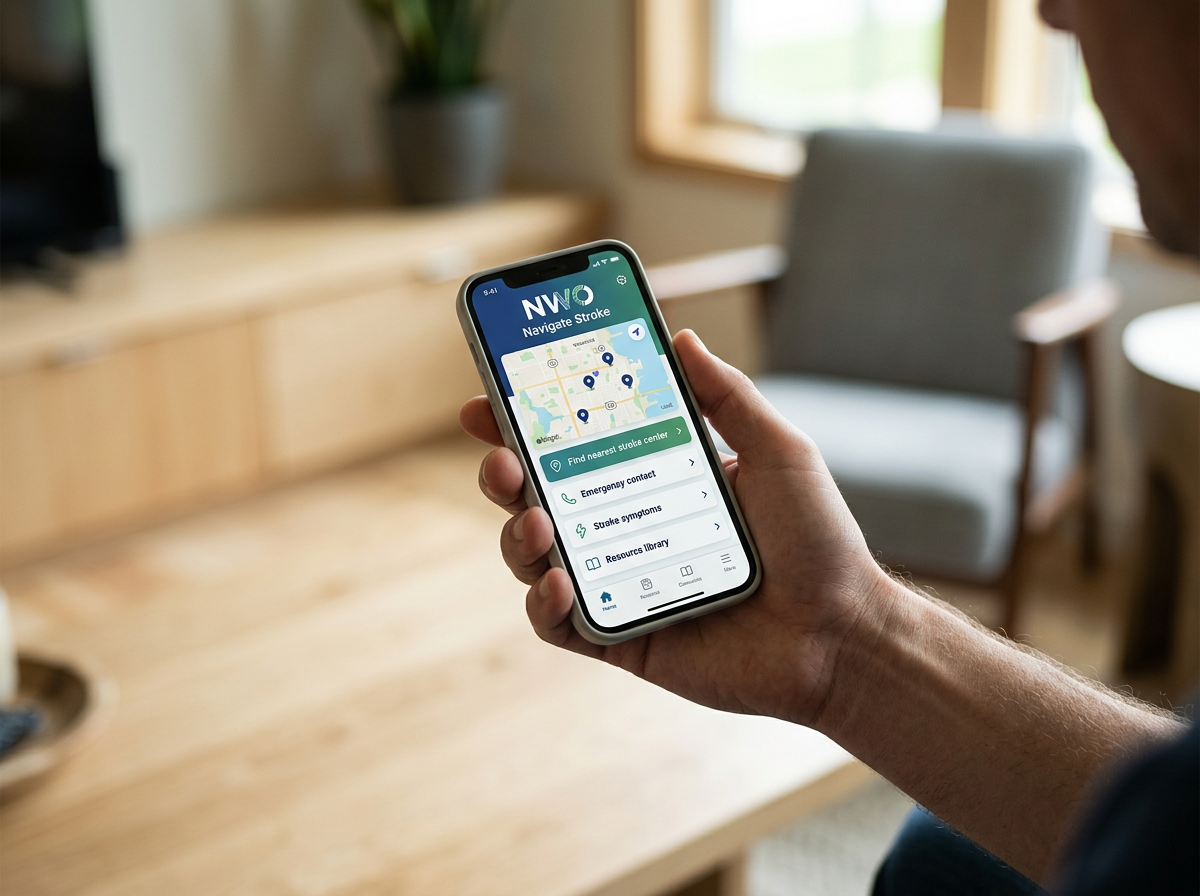
With Navigate Northwest, I looked at how geography, information, transportation and clinical decision-making affected access to stroke care.
With RAPID AI and mechanical thrombectomy, I looked at what had to change across an entire organization to create a new clinical capability.
Different problems.
Different technologies.
The same question:
What is preventing people from achieving the outcome we need—and how can we redesign the system around that barrier?
That is the way I think about technology.
I don't start with the software.
I start with the problem.
I start with the people.
And I work backward toward the solution.
The problem wasn't that employees didn't have enough information. The problem was that information was fragmented across an organization.
CORPORATE INTRANET - A Case Study
From Paper Binders to an Enterprise Information & Workflow Platform
A case study in understanding how people work before building the technology they need.
In the late 1990s, corporate information in healthcare was still largely paper-based.
Policies lived in binders. Department contact information was maintained in multiple places. Memos and organizational information had to be distributed and kept current manually. Requests between departments were often handled through paper, telephone calls, or processes that depended on people knowing exactly who to contact.
The problem was not simply that information was difficult to find.
The deeper problem was that the organization had no shared, living information environment.
I had the opportunity to change that.
Working alongside another programmer, I helped develop a corporate-wide intranet for an acute-care hospital using ASP and ASP.NET. What began as an initiative to improve access to corporate information evolved into something considerably more useful: an internal enterprise platform that connected departments, information and workflows.
STARTING WITH THE PEOPLE
The technology was not the difficult part. The difficult part was understanding what people needed.
Every department had its own processes, terminology, responsibilities and frustrations. The solution therefore could not simply be a collection of webpages.
We worked with the organization to understand how people searched for information, how departments interacted with one another, and where work was being slowed down by the way information was organized.
The goal became simple:
Make it easier for people to find information and easier for departments to get work done.
THE 411 DIRECTORY
One of the simplest applications became one of the most successful.
The corporate 411 directory gave employees a single place to find departments and contact information across the organization.
It became the most-used application on the intranet, with more than 100,000 uses annually.
That mattered because it demonstrated something I have seen repeatedly throughout my career:
The value of technology is often found in removing small barriers that people encounter thousands of times.
We didn't need to create something technologically complicated.
We needed to solve a problem people experienced every day.
FROM INFORMATION TO ACTION
As people began using the intranet, we saw an opportunity to go beyond publishing information.
The platform evolved into a collection of applications and workflows designed around the way departments actually worked.
Examples included:
Maintenance Requests
Employees could initiate maintenance requests through the intranet rather than relying on paper-based or informal communication.
Biomedical Requests
The platform supported communication and workflow associated with biomedical equipment and service needs.
Human Resources
HR-related processes could be initiated and routed through appropriate organizational channels, including management requests involving hiring, termination and suspension.
Policies & Corporate Information
Employees and managers could access current policies and organizational information rather than relying on multiple physical copies stored in different locations.
Departmental Communication
The intranet became a common information environment where departments could interact and communicate more efficiently.
THE TRANSFORMATION
What started as a corporate information website became an enterprise information and workflow platform.
The distinction is important.
We weren't simply putting paper documents onto a website.
We were asking:
What if the technology could change how the work itself moved through the organization?
That question changed the project.
The intranet became a place where people could:
Find information → initiate a request → route work → communicate with another department → complete a process.
The technology became part of the organization's operating environment rather than simply another place to find documents.
WHAT I LEARNED
This project shaped the way I have approached technology ever since.
I learned that successful technology implementation starts with understanding how people actually work, rather than how we assume they work.
I learned that users often see a problem very differently from the person designing the system.
I learned that the most valuable application isn't necessarily the most sophisticated one. Sometimes it is the one that removes a frustrating barrier hundreds or thousands of times a day.
And I learned that technology becomes transformational when we stop asking:
"What can this software do?"
and start asking:
"What does this organization need to be able to do?"
That distinction has followed me through every major technology initiative since.
WHY THIS PROJECT STILL MATTERS
The technology itself was built in an earlier generation of web development.
The principle has not aged.
Organizations still struggle with:
fragmented information
departmental silos
duplicated processes
outdated workflows
difficult-to-find information
systems designed around technology rather than users
communication barriers between teams
The technology has changed dramatically.
The human problems have not.
That is why I still think about this project more than two decades later.
It was one of the first times I experienced what has become a recurring theme throughout my career:
Technology is most powerful when it removes a barrier between people and what they are trying to accomplish.
THE THREAD THAT CONNECTS MY WORK
The corporate intranet was an early example of the way I think.
Later, that same approach led me to redesign IT service delivery, develop regional healthcare applications, work with researchers and programmers to build Navigate Northwest, and lead the implementation of AI-enabled stroke technology.
The technologies were different.
The environments were different.
The problems were different.
But my approach remained remarkably consistent:
Listen. Understand the system. Find the barrier. Bring the right people together. Build what is actually needed.
That is what I mean when I say I build technology to solve problems.
I don't start with technology.
I start with the human problem.
A physician in a remote community shouldn't have to know the entire regional healthcare system to figure out where a stroke patient needs to go next.
Connecting a Region to Improve Stroke Care
Award-winning digital transformation initiative that connected clinicians, emergency services, researchers, and hospitals across Northwestern Ontario to improve time-sensitive stroke care through shared workflows, decision support, and regional collaboration.
Stroke treatment is one of healthcare's most time-sensitive challenges. In Northwestern Ontario, clinicians faced the additional complexity of delivering care across vast geographic distances, multiple hospitals, varied diagnostic capabilities, and air and land transportation systems. Every decision carried consequences for patients and families.
Along with a small team, I co-led a regional initiative that brought together neurologists, emergency departments, ORNGE Air Ambulance, land ambulance services, hospital leaders, researchers, Lakehead University, and software developers to design and implement Navigate Northwest—a clinical decision support application that helps physicians identify the most appropriate pathway for imaging, consultation, and treatment based on a patient's location and clinical presentation.
The project required more than technology. It required building partnerships, negotiating data-sharing agreements, mapping clinical workflows, securing research funding, and creating trust across organizations with different priorities and perspectives.
In 2023, the project received the RBC Innovation Hero Award in recognition of its contribution to improving regional stroke care across more than 500,000 square kilometres of Northwestern Ontario.
The experience reinforced a belief that has guided my career: meaningful innovation happens when technology is designed around people, communication, and collaboration—not the other way around.
click picture to find out more